
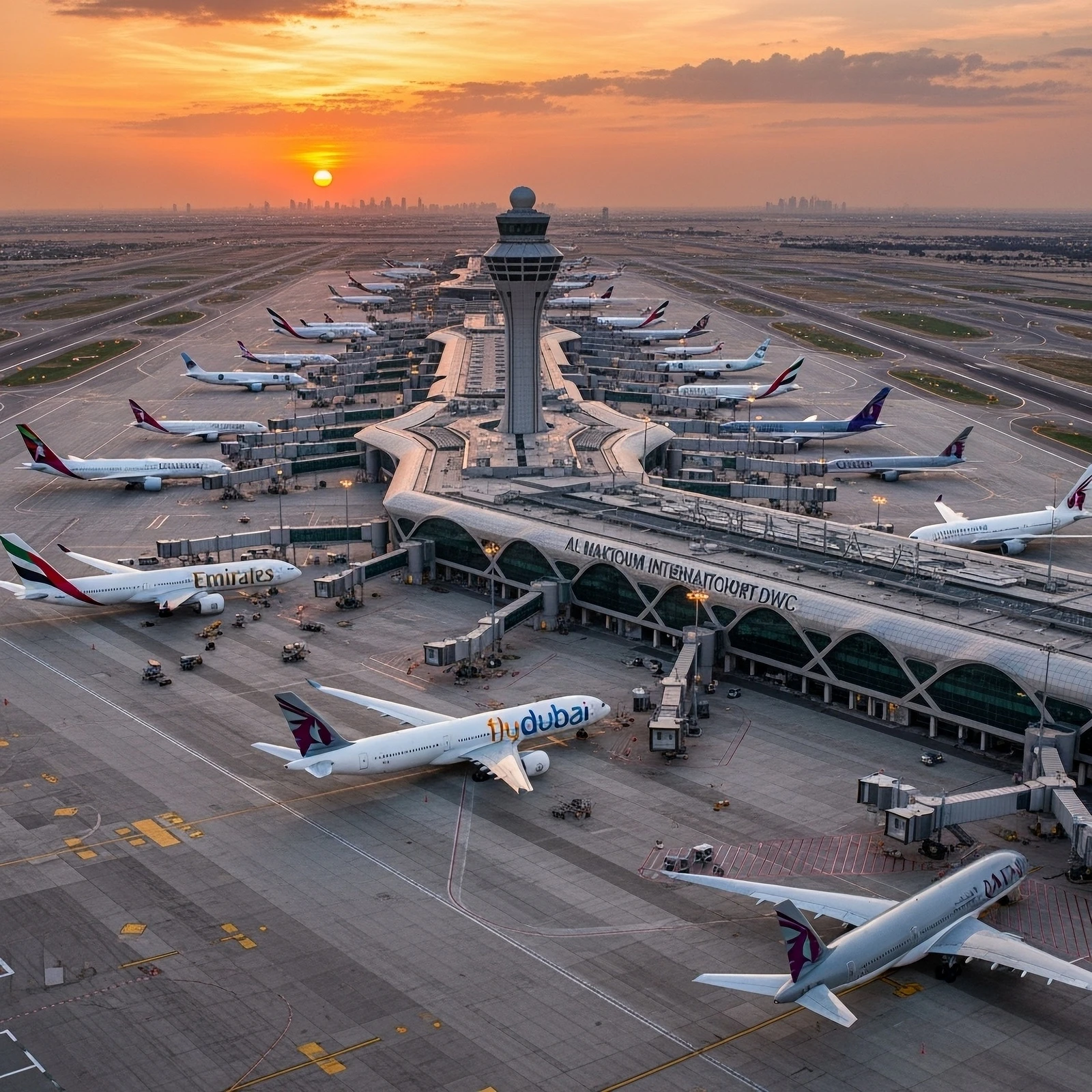
Dubai is building what is intended to become the largest airport in the world at Al Maktoum International, and the figures involved are large enough that they're worth setting out plainly — alongside an honest view of the timeline investors should actually plan around.
The Numbers Behind The Project
The approved project cost is AED 128 billion (roughly US$35 billion), with AED 13 billion of contracts already under construction and a further AED 55 billion expected to be awarded. First-phase passenger capacity is 150 million a year, rising to 260 million a year at full development, alongside 12 million tonnes of cargo capacity a year. The site itself runs to roughly 70 square kilometres, with 5 parallel runways, 400 aircraft stands at first phase rising to 430+ at ultimate development, a 15-minute target for luggage delivery, and on-site transport including a metro station, a 6,000-space car park and 4 automated people-mover stations.
This isn't a paper project. Over the past 15 months, the programme has logged 10 million work hours, driven 17,000 piles and moved 45 million cubic metres of earth. But the first phase is targeted to open in 2032, with the full transition away from the current Dubai International Airport (DXB) running from 2032 through 2035. That is a genuine multi-year horizon, and we think it's more useful — and more credible — to frame this as a patient-capital infrastructure thesis than as a short-term trading opportunity.
Why Dubai South Is The Area To Watch
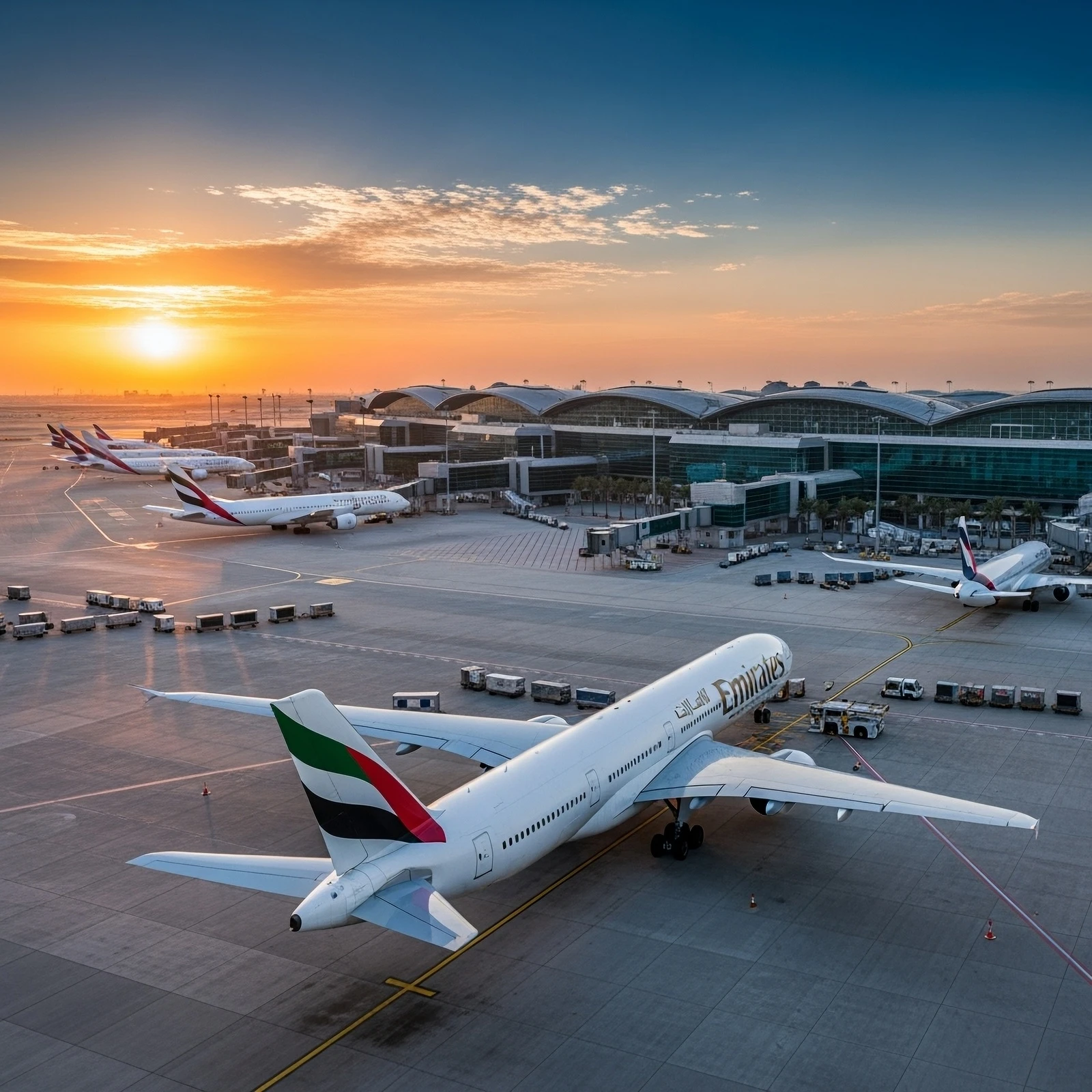
Dubai South, the district surrounding Al Maktoum International, is the direct beneficiary of the roughly AED 100 billion-plus separately committed to supporting infrastructure in the area — schools, parks and road upgrades — on top of the airport spend itself. It also sits alongside some of Dubai's other major strategic assets: Expo City Dubai, Jebel Ali Port, and direct access via Sheikh Mohammed Bin Zayed Road. Taken together, that combination of a confirmed multi-decade infrastructure commitment and genuine logistics and connectivity advantages is what underpins the growth-corridor case for the area, rather than any claim that prices are about to move quickly.
For investors with a longer horizon — and particularly those already comfortable with the idea of buying ahead of infrastructure, as many of our European clients are from experience with regeneration areas at home — Dubai South is one of the clearer examples in the current market of a location where the public investment case is specific, funded and already under construction, rather than merely proposed.
Key Stats to Call Out Visually
| Stat | Label |
|---|---|
| AED 128bn | Approved cost (≈ US$35bn) |
| 260 million | Passengers a year at full build-out |
| 2032 | First-phase target opening |
“The public investment case here is specific, funded and already under construction — rather than merely proposed.”
Thinking about the Dubai South growth corridor? Our team can walk you through current opportunities around Dubai South and the realistic timeline for the area to mature.
Sources
- Gulf News — “10 Key Numbers” (2026)
- Unique Properties